Dofus 3, or the eternal resurrection of an MMORPG celebrating its 20th anniversary
Launched in 2004, Dofus quickly became a staple of French video games. With its unique art style and turn-based tactical gameplay, the title from the Roubaix-based studio Ankama has captivated millions of players.
- Written by Louise Blas

Twenty years later, the saga makes its grand return to the forefront with the highly anticipated release of Dofus 3. More than just an update, this new installment is an ambitious technical and artistic overhaul, the result of several years of work and risky technological bets . A look back at a success story from the Hauts-de-France region, recounted at a PIX 2025 conference by Geoffroy Pineau and Maxime Lagache, respectively Producer and Lead Unity Developer on the iconic MMORPG.
Genesis of the project: why Dofus 3?
If Dofus has managed to survive the decades, it's thanks to the almost heroic preservation of a technology on borrowed time. Originally developed in Flash, the game long pushed the limits of its engine. But in 2020, with the official end of support for this antiquated technology, the obvious conclusion was inescapable: Ankama had to move on if it wanted to keep the magic alive for many years to come!
It was in this post-Covid context, between the end of 2022 and the end of 2023, that Ankama embarked on the ambitious project of Dofus 3. The studio opted for Unity, the engine that would become central to its production. Around thirty developers initiated a porting process in direct collaboration with the Unity teams. The project then grew in scope: it wasn't simply a matter of migrating the game from one technology to another, but of reinventing it, modernizing its interfaces, enriching its animations, and improving its performance.
This technological transformation is therefore much more than a simple engine change: it embodies the desire to bring Dofus into a new era, without betraying the soul of the original game!
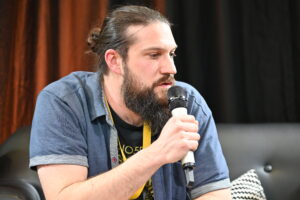
Maxime Lagache, Lead Unity Developer at Ankama
Breaking free from the constraints of Flash
Flash was long the cornerstone of Dofus, but also its main constraint. Graphical limitations, the inability to animate maps, restrictions on the number of simultaneous players: developers had to contend with an increasingly outdated engine. Geoffroy Pineau and Maxime Lagache are adamant on this point: maintaining Dofus 2 was nothing short of a technical feat.
The switch to the Unity engine was a liberation, but the transition wasn't painless. The task ahead was monumental: exporting twenty years' worth of assets, evolving a cult classic without disrupting its balance, all while keeping Dofus 2 and its community of over 200,000 monthly players alive. A truly remarkable anecdote: the team even went so far as to recreate HD textures from simple screenshots, as the original files were either unavailable or difficult to locate. A massive number of automated scripts were used to manage this colossal volume of content. For Maxime Lagache, this remains the most painful memory of the project: managing the HD and 4K packs, with 140,000 textures to render at three different quality levels. A "real nightmare," as Maxime Lagache puts it.
For Ankama, this project is also an opportunity to recruit new developers. With Flash being a dead and buried technology, switching to Unity allows the French giant to attract young talent and refresh its teams. Today, all of the studio's new projects are designed around Unity. A welcome unification.
Announcements and launch: a controlled marketing shift
In 2024, after several years of semi-confidential development, Ankama is making a complete turnaround in its communication strategy . It's all about transparency, devlogs, community surveys, an intense four- to five-month beta phase, and above all, a major campaign orchestrated around Twitch in December 2024.
The goal is clear: to win over veteran players and attract a whole new generation of gamers. Thanks to the involvement of major figures in the French streaming scene, including Kameto, Squeezie, MisterMV, and the esports teams Solary, Karmine Corp, Aegis, and GentleMates, the launch has reached unprecedented proportions. The result: over 300,000 pre-registrations upon the beta announcement, and one million players reached in just one month . Our sources tell us that they even had to urgently increase the number of servers to cope with this record influx.
In terms of awards, recognition came quickly: Dofus 3 won the award for best Game as a Service (GaaS) at the Pégases 2025, a prestigious accolade in a context that is nonetheless tense for the French video game industry.
The multi-account puzzle
While the switch to Unity solved many problems, it created new challenges, notably the thorny issue of multi-accounting . This characteristic of the Dofus community, where roughly half enjoy playing multiple characters simultaneously, presents a technical, ergonomic, and marketing challenge.
Currently, the team is considering two solutions: either allowing multiple windows, with an interface designed to facilitate switching between characters; or simulating multiple characters on a single client. The second approach seems more likely, although it also raises new questions: how to manage save files? How to prevent problems? How to organize data flow on the server side?
Still in the discussion phase, this topic clearly illustrates the complexity of providing answers to current technical constraints while perpetuating habits deeply rooted in the community.
Production memories: between hardships and moments of grace
Behind the numbers and lines of code, there are people, struggles, and timeless moments. For Maxime Lagache, the most cherished memory remains the release: the culmination of two years of hard work rewarded by the enthusiasm of longtime fans and newcomers alike. For Geoffroy Pineau, it's the closure of the Dofus 2 servers: "a work that transcends you." A historic moment, symbolized by Squeezie's emotion upon discovering his NPC in the new version of the game.
But the road was also fraught with obstacles. Geoffroy Pineau particularly remembers the DDoS attacks, unprecedented in the history of the saga, which disrupted the first two weeks after launch. This caused enormous stress for the team, compounded by intense pressure from the community.
Despite the celebration being somewhat marred by server attacks, pride prevails . With Unity, Dofus 3 will benefit from unprecedented possibilities: dynamic map animations, shaders, a particle system, richer visual feedback… The World of Twelve will now be able to evolve according to the players' choices. A promise of enhanced immersion that should delight longtime fans.
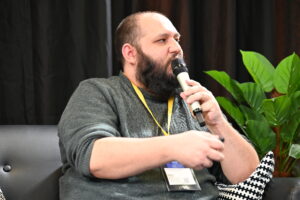
Geoffrey Pineau, producer at Ankama
Finding the balance between boldness and loyalty
Dofus 3 is the story of a studio that dared to shape its raw gem without risking breaking it. A project that required years of work, constant questioning, and a perfectly calibrated marketing strategy. Ankama managed to find the balance between fidelity to its origins and technological audacity, reviving a legend of French gaming in an era of realistic 3D blockbusters. While the success of this resurrection is already evident, the future looks even richer: evolving gameplay, emerging technologies, new expansions… One thing is certain, Dofus 3 will continue to surprise!
The PIX festival brings together the cultural and creative industries ecosystem
Geoffrey Pineau and Maxime Lagache were invited in April 2025 as part of the PIX festival organized by Plaine Images. PIX was created with the aim of showcasing the key players in the cultural and creative industries of the Hauts-de-France region.
PIX is both a time for meetings between players in the creative industries sector and a showcase of inspiration for professionals "from elsewhere" who want to take advantage of the good ideas, methods, creativity and innovations produced within the CCIs.
The full replay of our conference is available here: