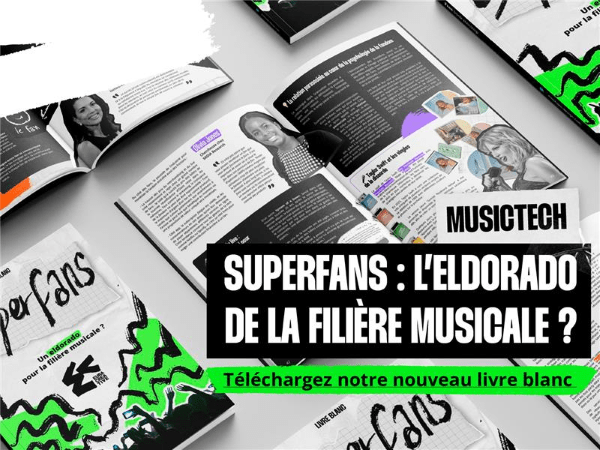
Fan engagement: revenue for the industry and artists
In a musical landscape disrupted by streaming and changing music consumption habits, one figure crystallizes all attention: the superfan !
-

-


Capable of listening to their favorite artist ten to fifteen times more than average, first in ticket and t-shirt purchases, and highly vocal on social media and within their community, this ultra-engaged fan embodies hope for an industry seeking growth. Gathered for a roundtable discussion at the 2025 edition of the PIX festival, Didier Borg , Maxence Bazin , and Robin Champseix shared their vision of this now-essential phenomenon.
Superfan: a small percentage that can change everything
The definition of a superfan varies among different groups, but some markers are generally agreed upon. Base For Music has developed a sophisticated system for classifying fans by level of engagement, based on various metrics and types of content viewed. This scoring system identifies the most engaged fans , who are sometimes rewarded for their loyalty with exclusive perks, such as early access to new tracks.
For Billy , purchasing behavior is a key indicator that is closely monitored. Robin Champseix points out that superfans are the quickest to consume, particularly within the first 72 hours following an announcement (tickets, merchandise, recordings). Furthermore, 22% of consumers buy more than just tickets around events, generating approximately 20% more revenue for labels and producers.
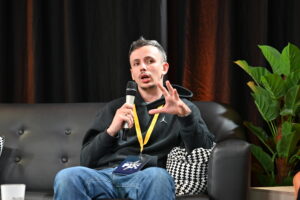
Maxence Bazin, CEO of Base for Music
One of the main challenges, however, remains access to relevant data . As Maxence Bazin explains, “The marketing logic is that you reach audiences on social media, redirect them to the platforms, and then it’s a black box.” This lack of transparency considerably complicates the evaluation of campaign effectiveness and the precise identification of superfans. It is precisely for this reason that Base For Music has developed partnerships with Spotify, Deezer, and Apple Music in order to obtain more detailed information on this type of listener.
When passion becomes a driver of value creation
The transformation of an ordinary fan into a superfan ready to fully immerse themselves in their passion represents considerable economic potential for various players in the industry. The South Korean model , and more specifically the group BTS, is undoubtedly the most obvious example, as Didier Borg points out. Built as a true ecosystem, BTS relies on its "ARMY," which, in addition to being a community of extremely enthusiastic fans, is also a major economic driver . This strategy translates into the sale of concert merchandise, the development of online and physical stores, and the creation of exclusive experiences.
As Didier Borg points out, the economic environment of the music industry has historically evolved by seeking to better satisfy its most dedicated fans by offering them concerts, magazines, merchandise, and… experiences. Experiences are now central to the value creation strategy.
The COVID-19 pandemic has accelerated innovation in this area, pushing companies to find solutions to continue interacting with fans remotely and to monetize the time and attention surrounding artists. The group BTS, in particular, managed to sell over 750,000 tickets for an event streamed live online!
For his part, Robin Champseix explains Billy's approach: offering bundles that integrate merchandise into the ticket purchase process. This system not only increases the average order value, but it also allows for a better understanding of fanbase expectations thanks to the data collected.
From likes to loyalty: building a lasting relationship
So, how exactly do you grow and nurture this valuable fan base? Base For Music has developed tools to track engagement and transform ordinary listeners into "extraordinary" ones. These solutions allow artists to develop and monitor their audience. This is achieved through features designed to facilitate listener conversion via smartlinks, which automatically redirect users based on specific contextual criteria. This method is particularly effective, as conversion rates can reach 70 to 80% depending on the quality of the activation, as Maxence Bazin explains.

Robin Champseix, CEO of Billy
For its part, Billy offers a collaboration tool for producers, labels, and business partners, with data sharing related to buyers and participants (with their consent). Rather than opting for a traditional CRM, Robin Champseix and his team chose to use a tagging system that precisely defines the identifying characteristics of superfans, such as a spending threshold of €80 per order, for example.
Initiated by Didier Borg during the pandemic, Hey Live aimed to "put live performance back at the heart of the relationship and empower artists in relation to social media" by offering tools for interaction and event creation . Inspired by the South Korean platform Weverse, which placed gamification at the core of the fan/artist relationship, with points to be earned to purchase merchandise, this service aimed to create a complete ecosystem around the artist.
A locked-down market and strong resistance
Hey Live didn't survive due to a lack of industry support. "The artist is far away, the contracts are numerous, the data is locked down," laments Didier Borg. In this complex industry, innovation often has to contend with everyone's interests. In this context, the support of the major labels appears as a determining factor for success. As Didier Borg explains, "Without market approval, there's nothing." He cites the example of Spotify, which had to wait for market approval in exchange for conditions dictated by the major labels.

Didier Borg, general manager of narae
Maxence Bazin confirms this reality: “When you work with large companies like Universal or Sony, data protection takes precedence over usage.” Faced with this situation, Base For Music had to adapt its strategy by offering its technology and interface as a white-label solution . This allows large companies to retain ownership of their data.
Robin Champseix recounts how Billy was forced to pivot twice: first by transforming his solution into a white-label product, integrated into the sales process, and then by simplifying the process to convince the major studios. Only after securing the support of the three major studios (Universal, Sony, and Warner) was Billy finally able to impose his solution on the producers. This process, however, required at least 15 months of intense negotiations!
Numerous opportunities, even for emerging artists
Despite the numerous hurdles to overcome, the superfan market offers considerable opportunities. But contrary to popular belief, these models aren't necessarily reserved for the biggest names in the industry. A significant portion of Base For Music's services focuses on emerging artists . Certain musical genres, such as jazz, have their own unique characteristics. According to Maxence Bazin, the challenge lies in reaching the right people, who represent very specific audiences. But, on the other hand, these are "profiles that respond well and generate a lot of engagement."
In a market constantly seeking to create value, monetization strategies for superfans are giving rise to various projects . For example, the market leader Spotify is considering a Superfan plan, Universal Music Group is looking for specialists in the field, and Warner Music is developing a dedicated app. These different initiatives demonstrate a growing interest in the subject, even if no clear dominant model has yet emerged.
It's hard to deny: the superfan is no longer a bonus, they're a true pillar. In a changing industry, value is now built more on the quality of the relationship than on the quantity of listens. Identifying, nurturing, and engaging these highly dedicated fans is investing in a lever for sustainable growth!
The PIX festival brings together the cultural and creative industries ecosystem
Didier Borg, Maxence Bazin and Robin Champseix were invited in April 2025 as part of the PIX festival organized by Plaine Images. PIX was created with the aim of showcasing the key players in the cultural and creative industries of the Hauts-de-France region.
PIX is both a time for meetings between players in the creative industries sector and a showcase of inspiration for professionals "from elsewhere" who want to take advantage of the good ideas, methods, creativity and innovations produced within the CCIs.
The full replay of our conference is available here:
And to find more conferences, visit our YouTube channel.
How can the music industry master superfan strategies?
– analyze concrete cases (startups, labels, artists)
– to give you some keys to thinking about how to meet this need
Whether you're a record label or a music tech company, discover the keys to the superfan economy!