Learning and playing music: tech is shaking up the game
Whilst the pandemic has turned our lives upside down, it has also accelerated the growth of a sector undergoing radical change: music education. With face-to-face lessons no longer an option, both pupils and teachers have turned to digital teaching methods. This rapid transition has paved the way for new, more interactive and personalised ways of learning. It is against this unique backdrop that three players in the field have come out on top: Solfy, Piano LED and Guitar Social Club.
- Written by Louise Blas

Gathered for a round-table discussion as part of the 2025 edition of the PIX festival, their respective founders – Anicet Bart, Anthony Bitard and Yohann Abbou – shared their vision of musical learning undergoing a complete reinvention. One key question guided the discussion: how can technology transform music education – particularly through gamification – without compromising its essence?
The educational revolution through technology
Gone are the days of dusty textbooks and tedious teaching methods – make way for engaging tools! Each solution presented offers a structured and highly gamified experience: at Guitar Social Club, learning the guitar follows clear steps, supported by in-app notifications, adopting a model similar to that of Duolingo for language learning. For its part, Piano LED relies on its LED strip, which adapts to the user’s playing, making practising the instrument much more intuitive. As for Solfy, the platform reimagines music theory by integrating with existing music lessons, whilst adding a touch of fun: rewards, collectables, and even a game of ‘Seven Families’.
One of the key themes of this discussion was the need to embed a personalisation system at the heart of these platforms, relying heavily on AI. Solfy and Guitar Social Club are also collaborating with teams at the CNRS to integrate educational artificial intelligence into their solutions.

Anicet Bart, CEO of Solfy
In practice, Solfy provides teachers with summarised analyses of pupils’ progress. Piano LED collects playing data to tailor the user experience in real time, with the aim of expanding its offering to include the automated transcription of YouTube videos. As for the app for budding guitarists, more than 4,500 videos, analysed according to 27 criteria, enable personalised learning tailored to each user’s level and difficulties.
User engagement: the key to success
Beyond the possibilities for personalisation and interaction, the challenge is clear: to keep pupils motivated in order to minimise drop-out rates, which are common at the start of the learning process.
Solfy has understood this well: the music theory app is designed to become part of the classroom routine, create an emotional connection through a mascot, and build loyalty among young users thanks to a strong brand identity. Whilst the content does not change fundamentally over time, one-off events and a seasonal approach help to engage the community. As Anicet Bart explains, the aim is to “offer rewards to maintain short-term motivation in the face of a very long-term goal.”
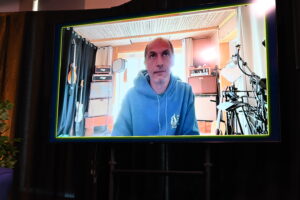
Yohann Abbou, CEO of Guitar Social Club
At Guitar Social Club, we’re embracing the ‘phygital’ (physical + digital) approach: monthly masterclasses, in-person events, community discussions… Everything is designed to make this ‘online’ guitar school a learning space based on participation.
Piano LED, meanwhile, focuses on performance analysis features and the social aspect of its app. In addition to its social media presence, the app will soon allow users to share recordings and scoreboards to encourage them to progress together.
In short, far from isolating users, the music app can become a space for interaction and sharing. Yohann Abbou sums up this vision well: “Today, digital technology divides and isolates, when in fact it can truly be a unifying force. And this unifying force exists because we share a common interest, whether it’s music theory, the piano or the guitar.”
Striking the right balance between digital and human
Far from putting teachers out of work, these tools are designed to complement their lessons. At Solfy, teachers remain at the heart of the process, supported by AI-generated recommendations. Guitar Social Club and Piano LED also recognise the limitations of an all-digital approach: when it comes to improvising or refining one’s technique, nothing can replace a teacher’s guidance and experience.
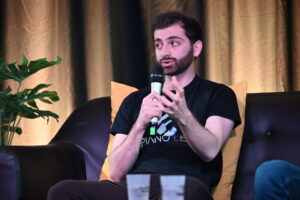
Anthony Bitard, CEO of Piano LED
The PIX festival brings together the creative industries ecosystem
Anicet Bart, Yohann Abbou and Anthony Bitard were invited in April 2025 to take part in the PIX Festival, organised by Plaine Images. PIX was born out of a desire to showcase the key players in the cultural and creative industries across the Hauts-de-France region.
As well as providing an opportunity for stakeholders in the creative industries sector to meet, PIX also serves as a source of inspiration for professionals from ‘elsewhere’ seeking to draw on the good ideas, methodologies, creativity and innovations generated within the cultural and creative industries.
Find out more on the festival website.
And below, the full recording of the conference:
And to watch more talks, visit our YouTube channel.